Table of Contents
ToggleSEO(search engine optimizatioin)
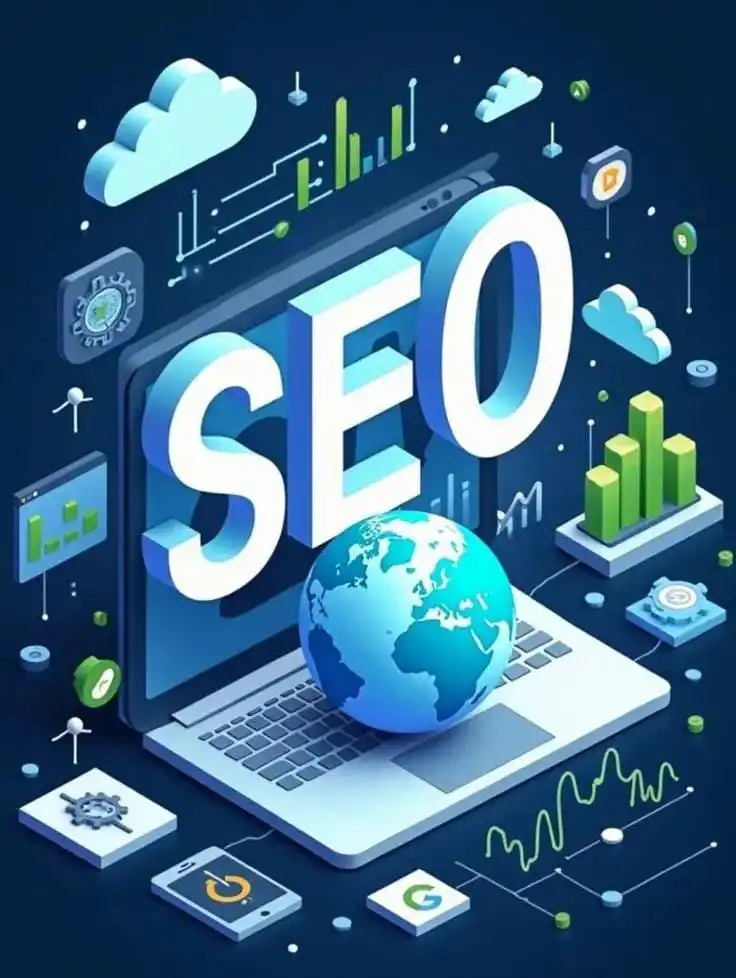
Search Engine Optimization (SEO) is a strategic process focused on strengthening a website’s visibility across search engines such as Google. It focuses on enhancing different elements of a website so it ranks higher when users look for related topics, products, or services. Unlike paid advertising, SEO emphasizes organic growth, helping businesses attract consistent, high-quality traffic without ongoing ad spend.
Off-page SEO focuses on enhancing a website’s trustworthiness and influence across the digital landscape. This is largely accomplished through inbound links—connections from credible and high-quality websites that indicate reliability and relevance to search engines. Additionally, factors such as social engagement, brand references, and overall online reputation play a key role in boosting a site’s visibility and authority beyond its own platform.
SMM(social media marketing)
Social Media Marketing (SMM) is a powerful digital marketing strategy that uses social media platforms to increase brand awareness, engage audiences, and drive business growth. In today’s digital world, platforms such as Facebook, Instagram, LinkedIn, X, and YouTube allow businesses to connect directly with their target customers. Unlike traditional advertising, SMM focuses on building meaningful relationships through valuable content, consistent communication, and interactive experiences. It goes beyond simply posting updates by creating a unique brand identity, understanding audience preferences, and delivering personalized content that resonates with users.
An effective social media marketing strategy includes content creation, audience analysis, campaign planning, paid advertising, and performance tracking. Businesses use analytics tools to monitor reach, engagement, conversions, and customer behavior, enabling them to optimize future campaigns for better results. Regular posting, creative visuals, and relevant messaging help maintain audience interest and strengthen brand credibility.
Audience engagement is a vital part of Social Media Marketing. Responding to comments, answering questions, and interacting with followers helps build trust, strengthen customer relationships, and create brand loyalty. Consistent engagement also increases brand visibility, generates leads, and supports long-term business growth.

SEM(Search Engine Marketing)
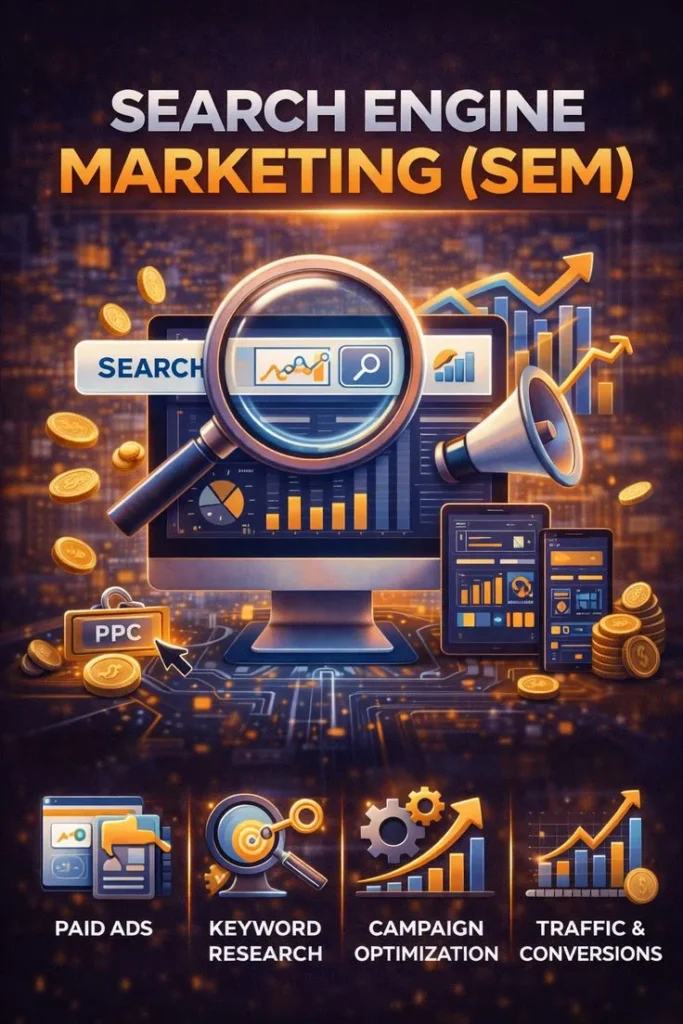
Search Engine Marketing (SEM) is a digital marketing strategy that increases a website’s visibility through paid advertisements on search engine results pages (SERPs). Businesses use SEM to display ads when users search for specific keywords related to their products or services. These ads appear at the top or bottom of search results, helping companies attract potential customers quickly and drive targeted traffic to their websites.
SEM primarily operates through a pay-per-click (PPC) model, where advertisers bid on relevant keywords using platforms like Google Ads. When users search for those keywords, the search engine conducts an auction to determine which ads will appear based on factors such as bid amount, ad quality, and relevance. Businesses can create compelling ad copy, set budgets, monitor campaign performance, and optimize strategies to maximize return on investment (ROI).
One of the greatest strengths of SEM is its precise audience targeting. Advertisers can reach users based on location, language, device type, age, gender, interests, and online behavior. This ensures that ads are shown to the most relevant audience, improving conversion rates and reducing wasted advertising spend. With real-time analytics and measurable results, SEM enables businesses to refine campaigns continuously, increase brand visibility, generate quality leads, and achieve faster business growth in today’s highly competitive digital marketplace.
EMAIL MARKETING
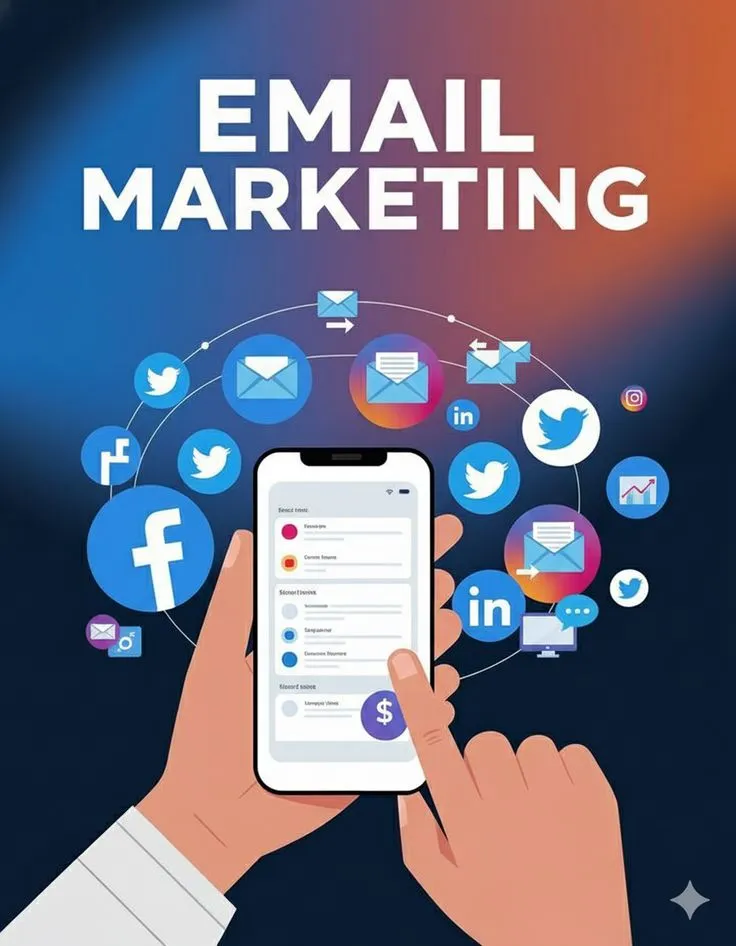
Email marketing is an impactful digital channel that empowers businesses to interact directly with their audience through customized and meaningful communication. By delivering messages straight to the inbox, it builds a closer connection, making it ideal for fostering trust and long-term loyalty. More than just promotional outreach, it emphasizes crafting engaging subject lines, visually refined designs, and insightful content that aligns seamlessly with the audience’s interests and behaviors.
A major benefit of email marketing is its ability to divide audiences with accuracy. Brands can organize subscribers based on age, purchasing habits, activity levels, or interests, allowing them to share content that feels highly relevant and personalized. This approach enhances the overall experience, increases engagement, and improves conversion potential. Moreover, automation simplifies communication by delivering messages at the right moment—such as greeting emails, cart reminders, or follow-up sequences—while reducing the need for continuous manual effort.
CONTENT MARKETING
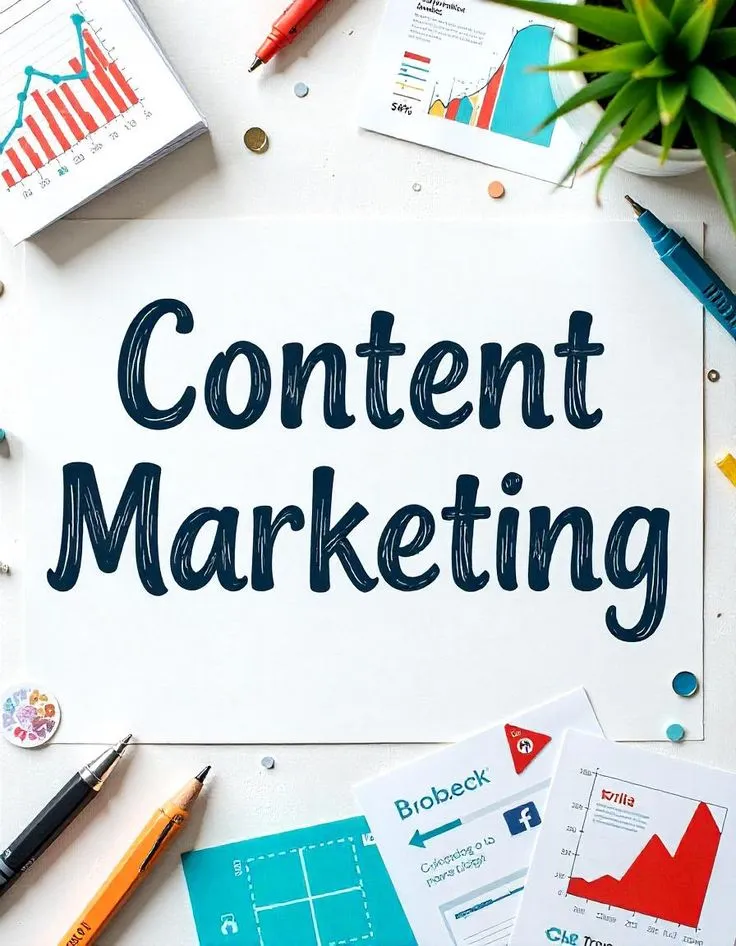
Content marketing is a structured method that focuses on developing and sharing impactful, relevant content to attract and involve a defined audience. Rather than emphasizing direct selling, it centers on delivering useful insights, actionable advice, and compelling stories that spark interest and build long-term credibility. The purpose is to offer real value that helps audiences form a connection with the brand and naturally progress toward informed actions.
This approach embraces multiple content types, including articles, videos, infographics, podcasts, social media content, eBooks, and beyond. Each piece is carefully developed to fulfill audience expectations, answer frequent questions, and deliver practical value. By aligning content with essential stages of the buyer journey—awareness, consideration, and decision—brands can effectively guide audiences from initial interest to final conversion with a smooth and engaging experience.
One of the most compelling benefits of content marketing lies in its power to build expertise and trustworthiness. By regularly delivering insightful and valuable information, brands can present themselves as dependable authorities in their field. This approach not only strengthens the confidence of their audience but also boosts their presence on search engines, since well-crafted content tends to achieve higher rankings and drive consistent organic visitors.
WEB DESIGNING
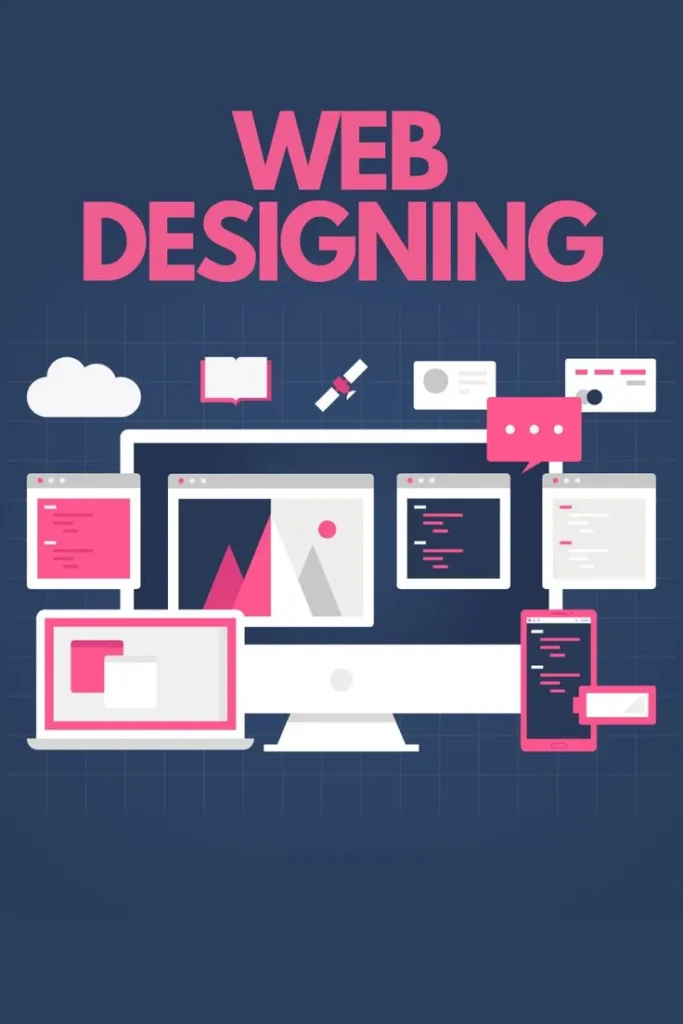
Web designing is a dynamic blend of artistic vision and technical expertise focused on developing visually striking, intuitive, and performance-driven websites. It extends well beyond the basic placement of content and visuals, encompassing the creation of a cohesive digital environment that communicates a brand’s personality while delivering effortless navigation and interaction. A thoughtfully designed website serves as a digital gateway, often shaping the initial perception visitors form about a company or individual, making it a critical element in establishing credibility and engagement.
At its essence, web design unites aesthetic charm with seamless functionality. Designers deliberately choose color combinations, typography, layouts, and visual features to build an interface that is visually engaging yet simple to use. Every component, from button alignment to the use of negative space, is carefully planned to create a natural flow, allowing users to move through the website effortlessly and locate information with ease, precision, and efficiency.
A fundamental pillar of web design is the strategic fusion of user experience (UX) and user interface (UI) disciplines. UX concentrates on the end-to-end journey a visitor undergoes, ensuring interactions feel seamless, intuitive, and naturally guided. In contrast, UI is centered on the visual composition and interactive touchpoints, including navigation systems, icons, buttons, and dynamic elements. When these facets are expertly synchronized, they deliver a unified digital experience that is not only aesthetically refined but also highly functional, adaptive, and effortless for users to engage with.