
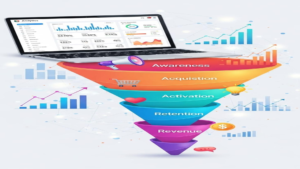
In today’s highly competitive digital landscape, businesses cannot rely on random marketing efforts to generate consistent results. Instead, they need a structured approach that guides potential customers from awareness to purchase—and beyond. This is where a marketing funnel plays a crucial role. A well-designed marketing funnel helps businesses understand their audience, nurture relationships, and ultimately convert prospects into loyal customers.\
This blog will explore what a marketing funnel is, its stages, why it matters, and how to build one that drives real results.
What Is a Marketing Funnel?
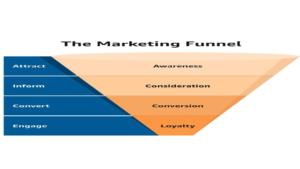
A marketing funnel is crucial as it brings organization and direction to your marketing efforts. Without a clear funnel in place, businesses often find it difficult to turn website visitors into valuable leads or conversions.
Here are some key benefits of using a marketing funnel:
1. Better Audience Understanding
A funnel helps you identify where your audience is in their journey. This allows you to create targeted content that addresses specific needs and concerns.
2. Improved Conversion Rates
By nurturing leads step-by-step, you increase the likelihood of turning prospects into paying customers.
3. Efficient Resource Allocation
Instead of spending money randomly, a funnel ensures your efforts are focused on strategies that drive results.
4. Stronger Customer Relationships
A well-structured funnel builds trust over time, leading to long-term customer loyalty.
The Stages of a Marketing Funnel
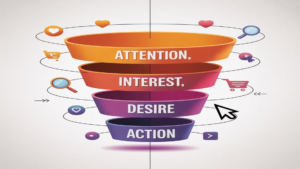
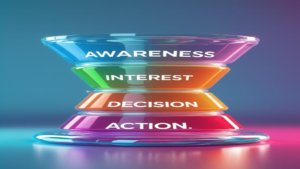
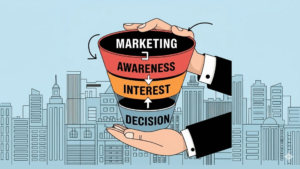
A typical marketing funnel consists of four main stages:
- Awareness
- Interest
- Decision
- Action
Each stage requires a unique strategy and approach.
1.Awareness Stage: Capturing Attention
The awareness stage is the initial phase of the marketing funnel (TOFU), where potential customers begin to notice your brand, product, or service. Currently, they might not yet clearly identify their problem or realize that a solution exists for it.
Goals:
- Increase visibility
- Reach a broad audience
- Generate initial interest
Strategies:
- Search engine optimization (SEO)
- Social media marketing
- Content marketing (blogs, videos, infographics)
- Paid advertising campaigns
- Influencer collaborations
Content Types:
- Blog posts
- Educational videos
- Social media posts
- Infographics
- Podcasts
At this point, the focus should shift away from direct selling and toward offering meaningful value while building brand recognition. The aim is to draw in a wide but relevant audience and help them become aware of and connected to your brand.
2.Interest Stage: Building Engagement
After users become familiar with your brand, they enter the interest stage. At this point, they begin engaging with your content and exploring more about your products or services.
Goals:
- Educate the audience
- Build trust
- Keep users engaged
Strategies:
- Email marketing campaigns
- Lead magnets (eBooks, webinars, free tools)
- Engaging blog content
- Interactive content (quizzes, polls)
Content Types:
- Detailed guides
- Case studies
- Email newsletters
- Webinars
At this point, the focus should be on delivering meaningful and relevant information that aligns with the audience’s needs. The more helpful and insightful your content is, the greater the chances of building trust and credibility with your audience.
3.Decision Stage: Encouraging Consideration
In the decision stage, potential customers are evaluating their options. They are aware of your product or service and are considering whether it is the right choice for them.
Goals:
- Highlight value and benefits
- Differentiate from competitors
- Address objections
Strategies:
- Product demonstrations
- Testimonials and reviews
- Comparison guides
- Free trials or consultations
Content Types:
- Customer success stories
- Product comparison pages
- FAQs
- Demo videos
This stage is crucial because it directly influences the purchasing decision. Providing clear, transparent, and persuasive information can significantly increase conversion rates.
4.Action Stage: Driving Conversions
The action stage represents the bottom of the funnel (BOFU), where potential customers take the final step—like buying something or finishing a specific desired action.
Goals:
- Convert leads into customers
- Simplify the buying process
- Encourage immediate action
Strategies:
- Strong calls-to-action (CTAs)
- Limited-time offers
- Discounts and promotions
- Easy checkout process
Content Types:
- Landing pages
- Product pages
- Checkout pages
- Promotional emails
At this stage, reducing friction is key. A seamless user experience can make the difference between a completed purchase and an abandoned cart.
Beyond the Funnel: Retention and Advocacy
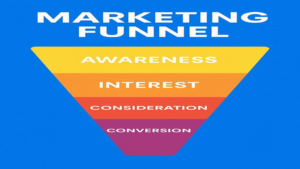
Modern marketing does not stop at conversion. Businesses must focus on retaining customers and turning them into brand advocates.
Retention:
Keeping customers engaged after purchase is essential for long-term success.
Strategies:
- Personalized email campaigns
- Loyalty programs
- Excellent customer support
- Regular updates and engagement
Advocacy:
Satisfied customers can become powerful promoters of your brand.
Strategies:
- Referral programs
- User-generated content
- Reviews and testimonials
- Social media engagement
Why the Marketing Funnel Matters
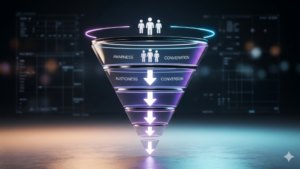
Understanding and implementing a marketing funnel offers several benefits:
1.Better Customer Understanding
It helps businesses analyze customer behavior at each stage and identify what influences their decisions.
2.Improved Targeting
By segmenting audiences based on their position in the funnel, marketers can deliver more personalized and relevant messages.
3.Increased Conversion Rates
A structured funnel ensures that prospects receive the right information at the right time, improving the chances of conversion.
4.Efficient Resource Allocation
Businesses can focus their efforts on strategies that deliver the best results at each stage.
How to Optimize Your Marketing Funnel
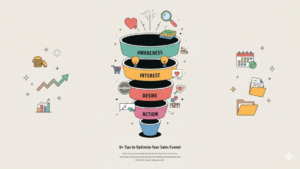
In order to optimize your marketing funnel’s efficacy, consider the following strategies:
1.Use Data and Analytics
Monitor engagement metrics, conversion rates, and user behavior. to identify areas for improvement.
2.Personalize the Experience
Adapt messaging and content to user preferences, behavior, and demographics.
3.Improve User Experience (UX)
Make sure your website loads quickly, is simple to use, and mobile-friendly.
4.A/B Testing
Test many iterations of the landing page, CTAs, and content. pages to determine what works best.
5.Align Marketing and Sales
Ensure both teams work together to provide a seamless customer journey.
Common Mistakes to Avoid
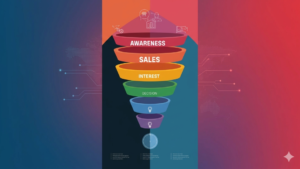
While building a marketing funnel, businesses often make the following mistakes:
1.Ignoring the Top of the Funnel
Focusing only on conversions without building awareness can limit growth.
2.Lack of Clear Strategy
Without a defined plan, efforts may become inconsistent and ineffective.
3.Poor Content Quality
Low-quality content can reduce trust and engagement.
4.Not Nurturing Leads
Failing to follow up with prospects can result in lost opportunities.
5.Overcomplicating the Process
A complicated funnel can confuse users and reduce conversions.
Real-World Example of a Marketing Funnel
Consider an online clothing brand:
Awareness: A person observes a social media advertisement media showcasing trendy outfits.
Interest: After reading the blog, they visit the website. posts about fashion trends.
They check user reviews and compare products before making a decision.
Action: They use a discount to buy something code.
Retention: The brand sends follow-up emails with styling tips.
Advocacy: The customer shares information about their purchase on social media media and refers friends.
This example demonstrates how each stage plays a function in directing the client toward a purchase and beyond.
The Future of Marketing Funnels
Marketing funnels are evolving with advancements in technology and changing consumer behavior. Today’s funnels are more dynamic and less linear. Customers may enter at different stages, skip steps, or revisit previous ones.
Key trends include:
- AI-driven personalization
- Omnichannel marketing
- Voice search optimization
- Interactive and immersive content
- Data-driven decision-making
Businesses that adapt to these changes can create more effective and flexible marketing strategies.
Psychological Triggers in the Marketing Funnel
Understanding human psychology can significantly boost conversions:
Scarcity: Limited stock or time offers
Social Proof: Reviews and testimonials
Authority: Expert endorsements
Reciprocity: Offering free value
Trust: Transparency and authenticity
1.Micro-Moments in the Marketing Funnel
Today’s customers make decisions in “micro-moments”—quick instances when they search, compare, or decide.
Key Micro-Moments:
I want to know (research phase)
I want to go (location-based search)
I want to do (learning or exploring)
I want to buy (purchase intent)
Why It Matters:
Brands that show up at the right micro-moment can significantly influence decisions.
2.Role of Storytelling in the Funnel
Storytelling is a powerful way to emotionally connect with your audience at every stage.
How to Use It:
Awareness: Share relatable problems
Interest: Tell engaging brand stories
Consideration: Highlight customer journeys
Action: Showcase success transformations
Impact:
Stories build trust, increase recall, and improve engagement.
3.The Flywheel Model vs Traditional Funnel
Modern marketing is shifting from funnels to a flywheel model, where customers drive growth.
Key Difference:
Funnel: Linear process
Flywheel: Continuous cycle powered by customer satisfaction
Focus Areas:
Delight customers
Encourage repeat engagement
Turn customers into promoters
4.Importance of Customer Journey Mapping
Mapping the customer journey helps visualize every interaction a user has with your brand.
Benefits:
Identifies gaps in the funnel
Improves user experience
Enhances personalization
Key Touchpoints:
Website visits
Social media interactions
Email communication
Customer support
5.Multi-Channel vs Omnichannel Funnels
Multi-Channel:
Using different platforms (social media, email, website)
Omnichannel:
Ensuring a consistent experience across all platforms
Why Omnichannel Wins:
Consistent messaging
Better user experience
Higher engagement and conversions
Conclusion
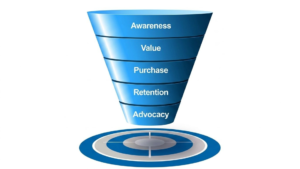
The marketing funnel serves as an effective model that enables businesses to interpret and direct the buyer’s journey with clarity. From generating initial interest to nurturing long-term loyalty, every phase contributes significantly to overall business growth.
By adopting a strategically designed funnel, prioritizing customer expectations, and consistently refining marketing efforts, companies can boost conversion rates while also fostering strong and meaningful connections with their audience.
In today’s fast-paced and highly competitive environment—where consumer attention is limited—gaining expertise in funnel strategies is not just beneficial, but crucial for achieving steady expansion and lasting success.
Author: Aparna